The honest answer
Yes, artificial turf can get hot. Like pavement and playground equipment, it absorbs sun and warms the surface, and on a bright summer afternoon it can be noticeably hotter than natural grass. Natural grass cools itself through evaporation, and plastic does not.
It is not always a problem, and there are simple ways to manage it.
What changes the temperature
Direct sun is the biggest factor. Dark colors, dense infill and a low pile all hold more heat. Air temperature, wind and the time of day matter too.
Turf in shade stays far more comfortable than turf in open sun.
Cooling options
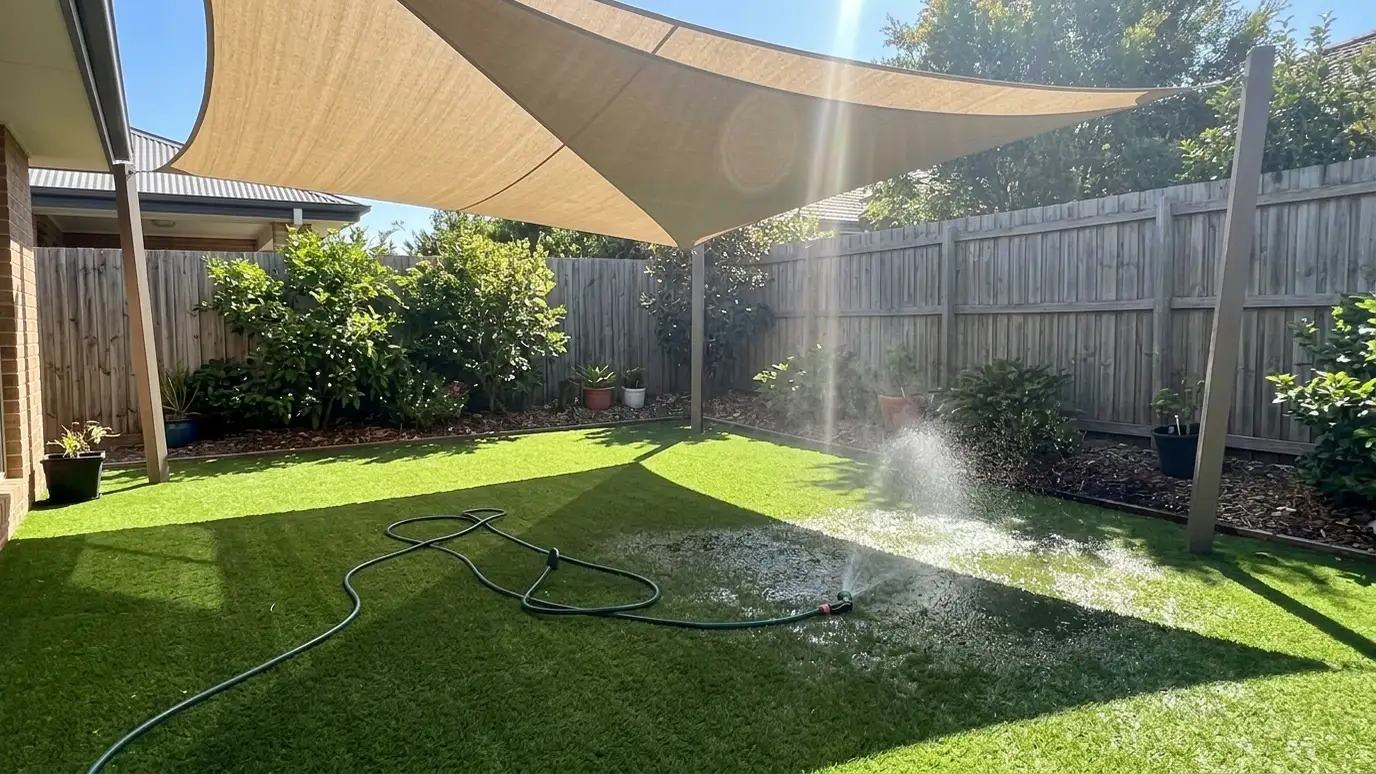
Light-colored blends and heat-reflective fibers reduce surface temperature. Some infills stay cooler than others. A shade sail, pergola or tree shade helps a great deal.
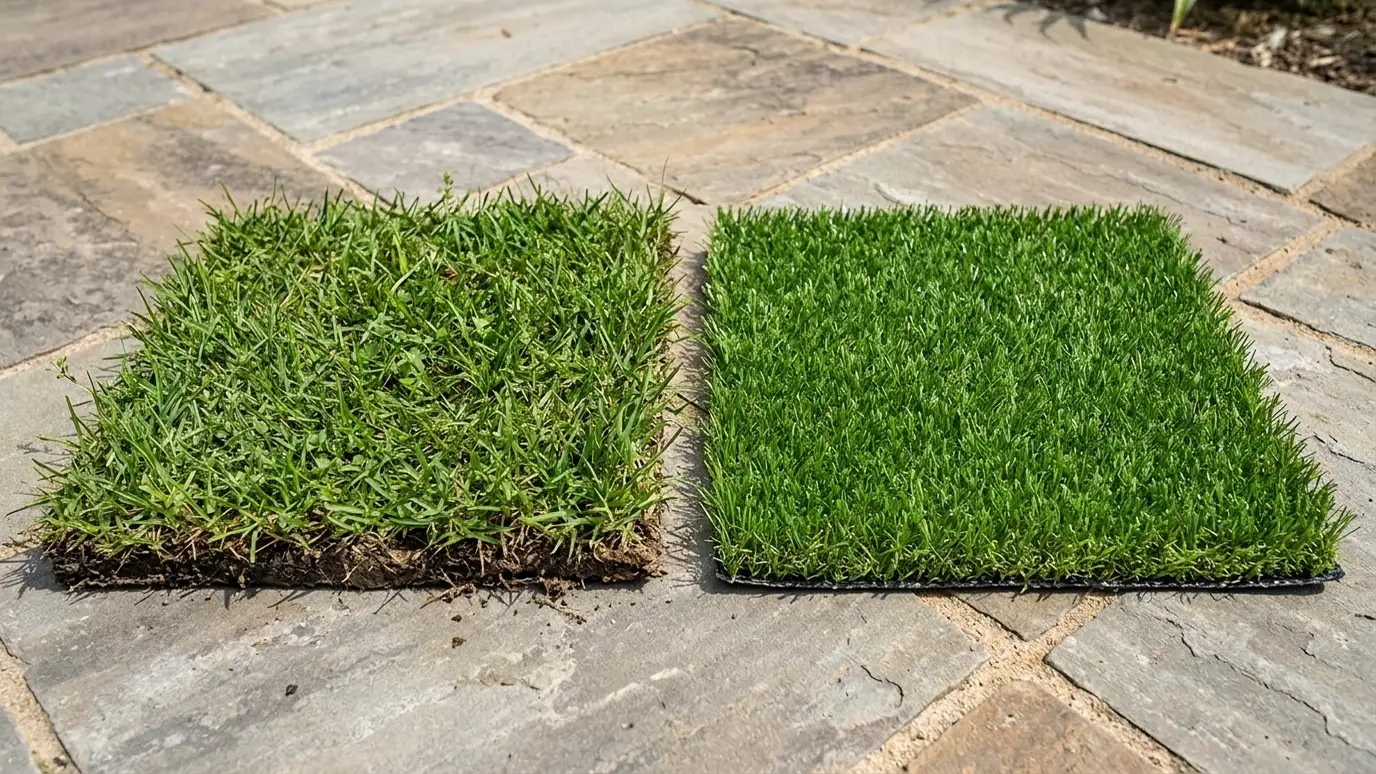
Ask your installer which options they offer, and test a sample in the sun.
Rinse with water
A quick hose-down cools the surface for a while. It is a good habit before letting kids or pets onto sunny turf on a hot day.
The effect is short, so it works best when combined with shade.
Where to place turf
Turf in shady side yards, covered patios, dog runs and play areas with shade works well. In full sun, consider sod or keep turf areas small and shaded.
We plan the layout around sun exposure.
Safety tips
Check the surface with your hand before letting children and pets onto it in midday summer. Keep water and shade available for pets.
Common sense goes a long way.
Put turf where it gets shade, pick lighter blends and keep a hose handy for sunny afternoons.