The big advantages
Turf stays green without water, mowing or fertilizer. It works in deep shade, on slopes and in places where grass has never thrived. It drains quickly and does not turn to mud, which makes it popular with families and dog owners.
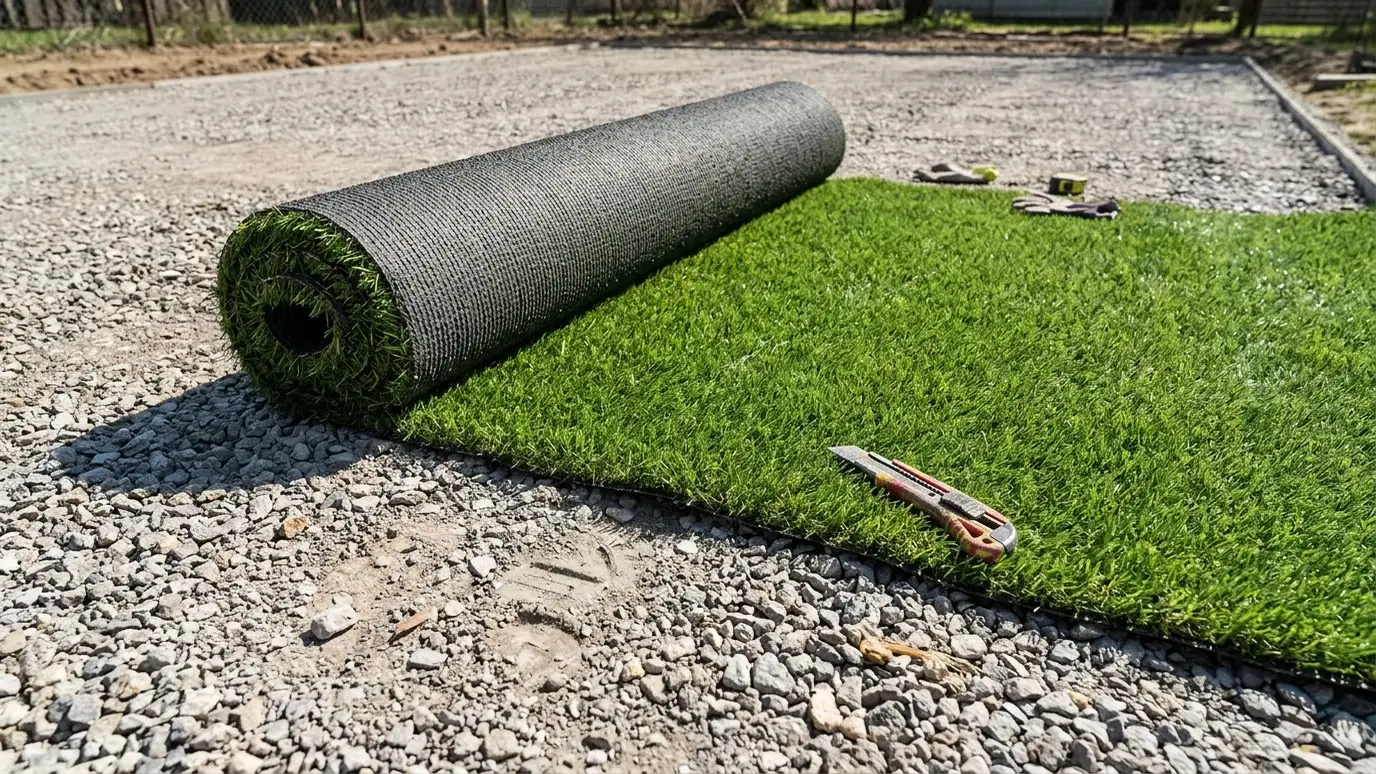
Well-installed turf can last many years with simple care.
Costs and savings
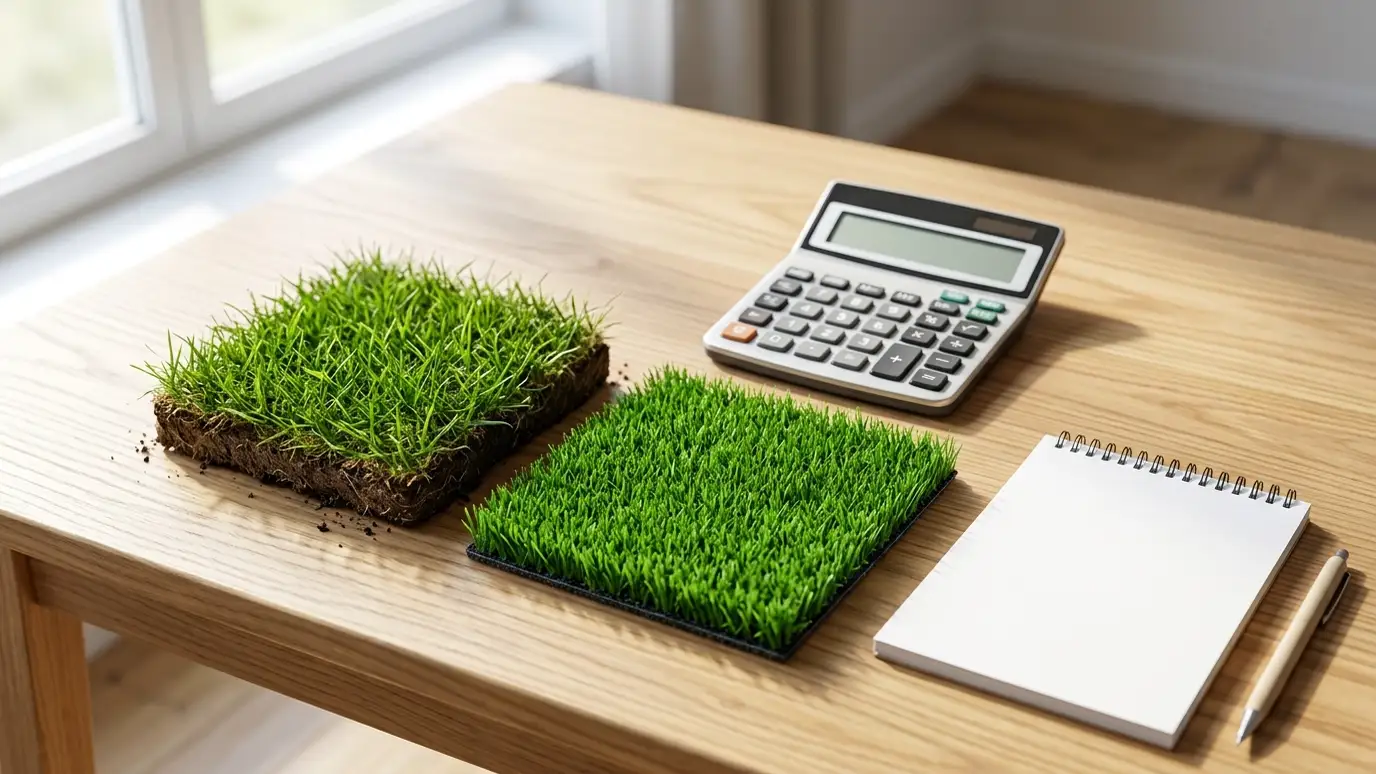
Turf costs more up front than sod. Over time you save on water, mowing, feeding and weed control, and the savings can offset some of the difference. Savings are greatest where grass would be hard to grow anyway.
Ask for lifetime cost comparisons that fit your yard.
Heat
Synthetic turf can get hot in direct summer sun, hotter than natural grass. Light colors, shade and rinsing help. Many owners keep turf in shaded or semi-shaded areas for this reason.
Test a sample in the sun before you commit.
Environmental trade-offs
Turf saves water and avoids fertilizer and mower emissions. It is made of plastic, does not support soil life and does not cool the air the way living grass does. Disposal at end of life is a consideration.
There is no perfect answer, and we try to present both sides fairly.
Pets and kids
Pet turf drains and can be rinsed. Odors are controlled with the right base and infill and a regular rinse. For kids, quality turf is soft and clean, but shock pads are recommended for taller play equipment.
Ask about materials and how they are tested.
Is it right for you?
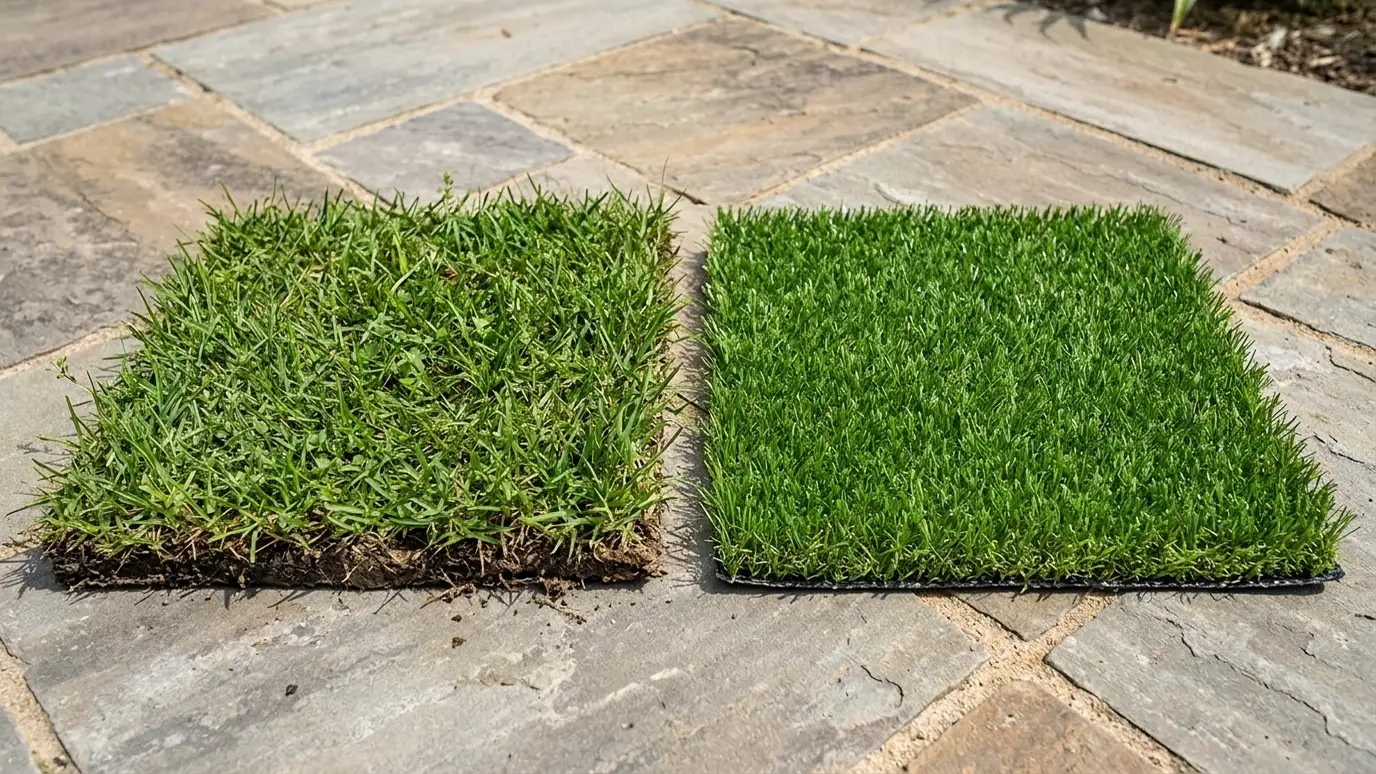
Turf is a good choice for shady, sloped or heavily used areas, for owners who value low maintenance and for areas where grass keeps failing. Natural sod is better for those who love the feel and cooling of real grass.
Many yards use both, which is what we often recommend.
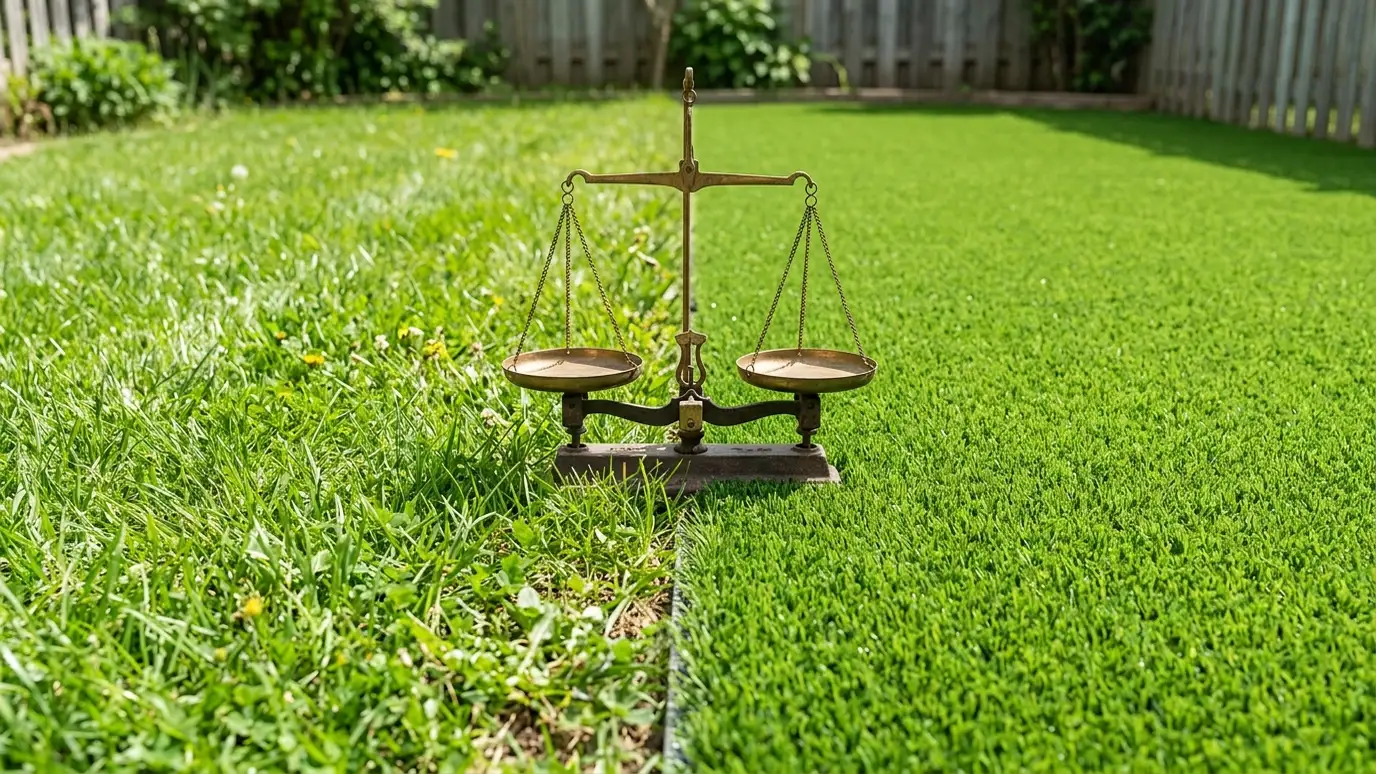
Choose turf where grass struggles or time matters most and sod where you want real grass, and be honest about heat and cost.