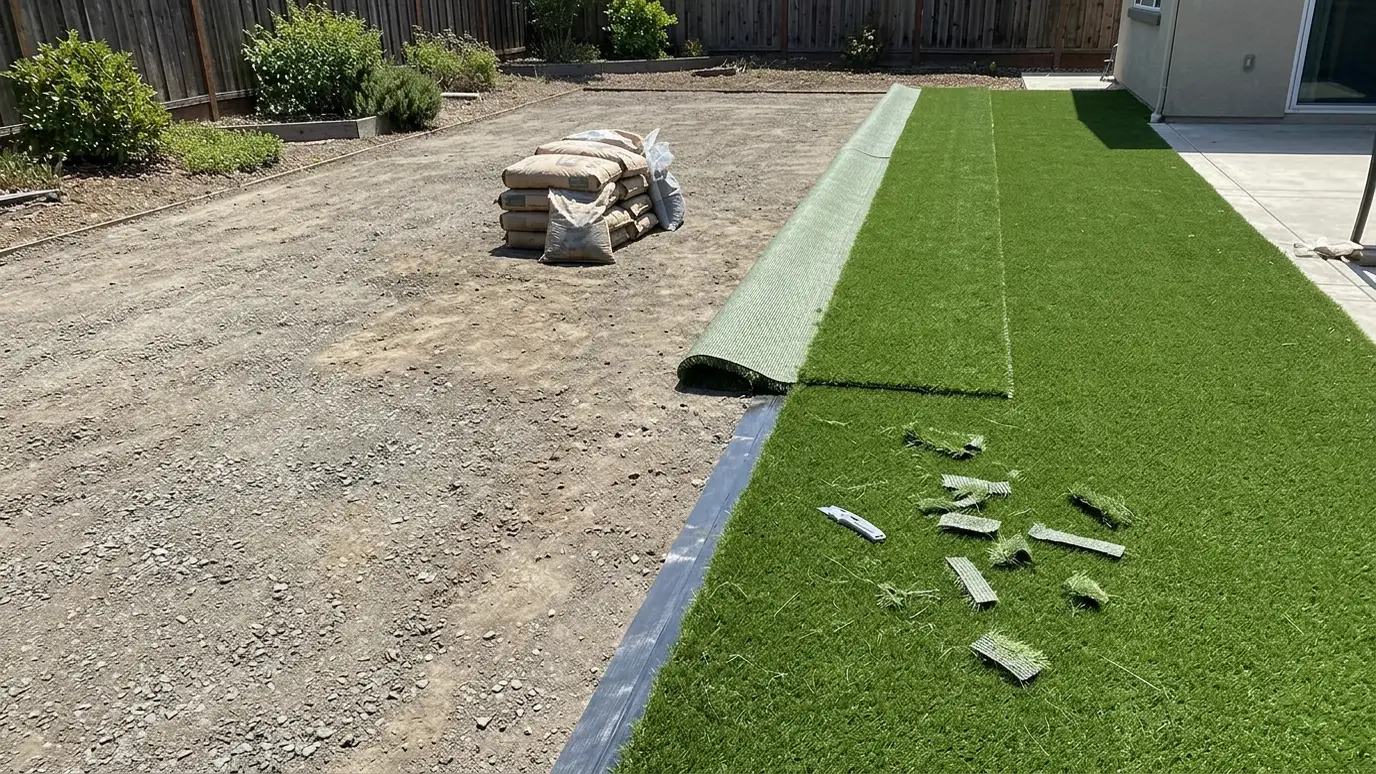
The base is the foundation
Everything you see rests on what you do not. A thin or uncompacted base leads to ripples, sinking, puddles and weeds. A good one keeps turf flat and draining for many years.
It is also the part most easily skimped when a quote seems too good to be true.
Dig and clean
Organic soil, roots and soft spots must go. They decompose and settle, which makes the turf sink. Excavation depth depends on the existing soil and the use.
We usually dig deep enough for several inches of stone plus the turf.
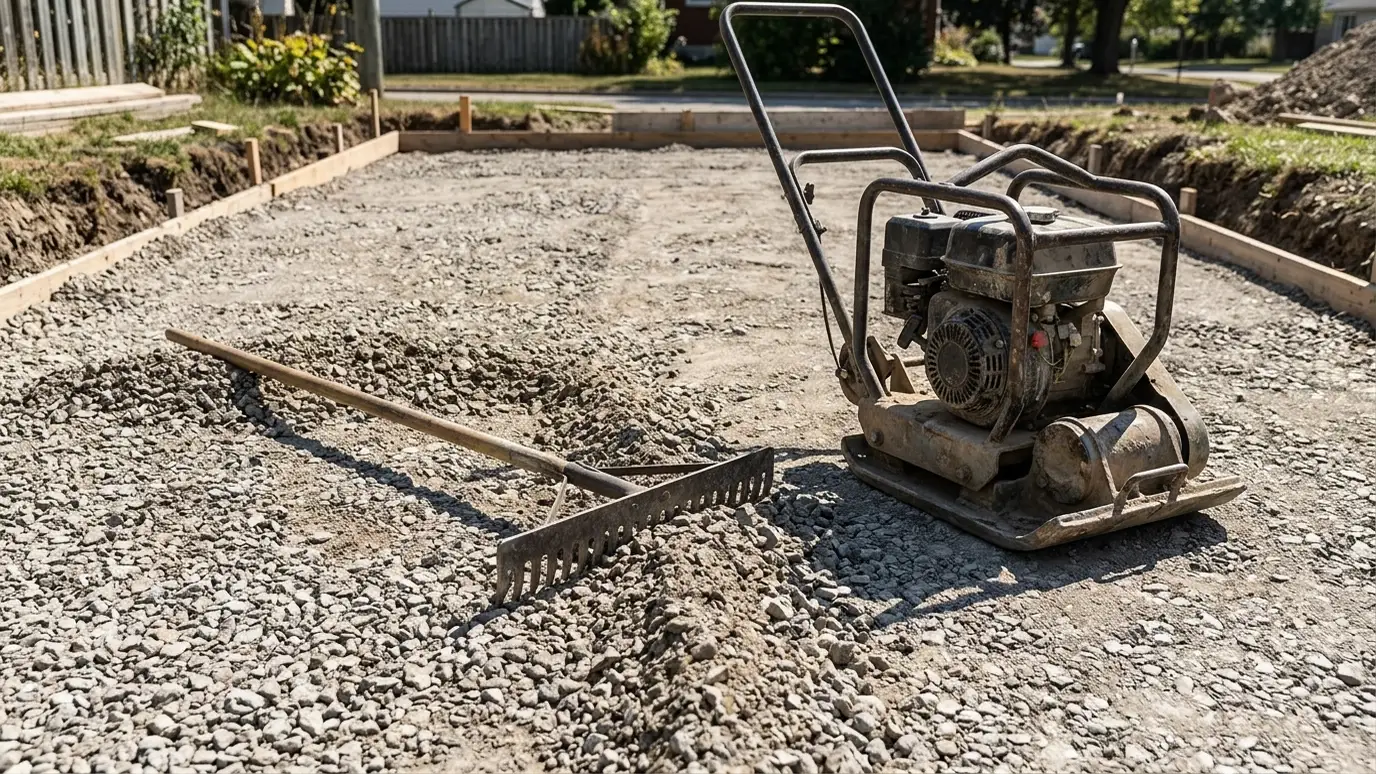
Crushed stone, in lifts
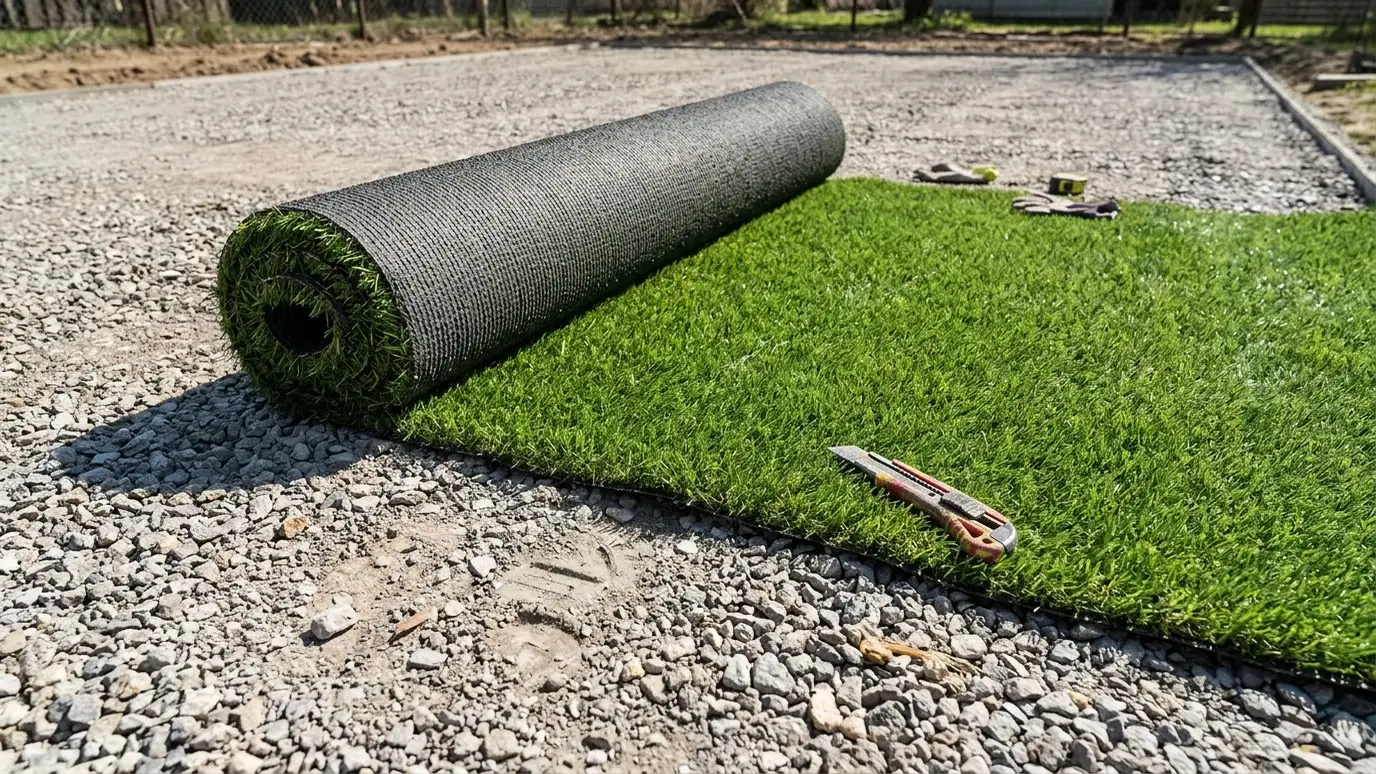
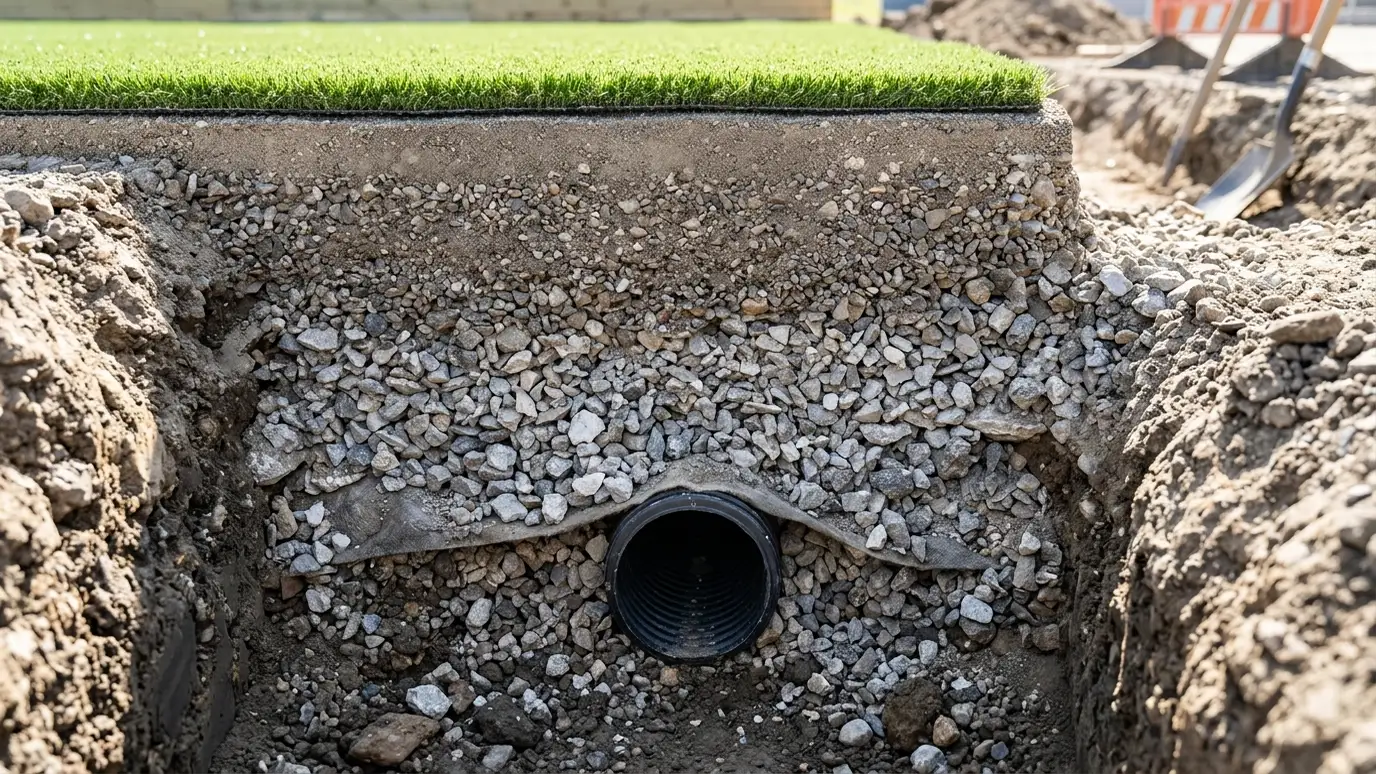
Angular crushed stone locks together when compacted. It is laid in layers, called lifts, and each lift is compacted with a plate compactor. A finer layer on top gives a smooth surface for the turf.
Rounded gravel or sand alone can shift and hold water.
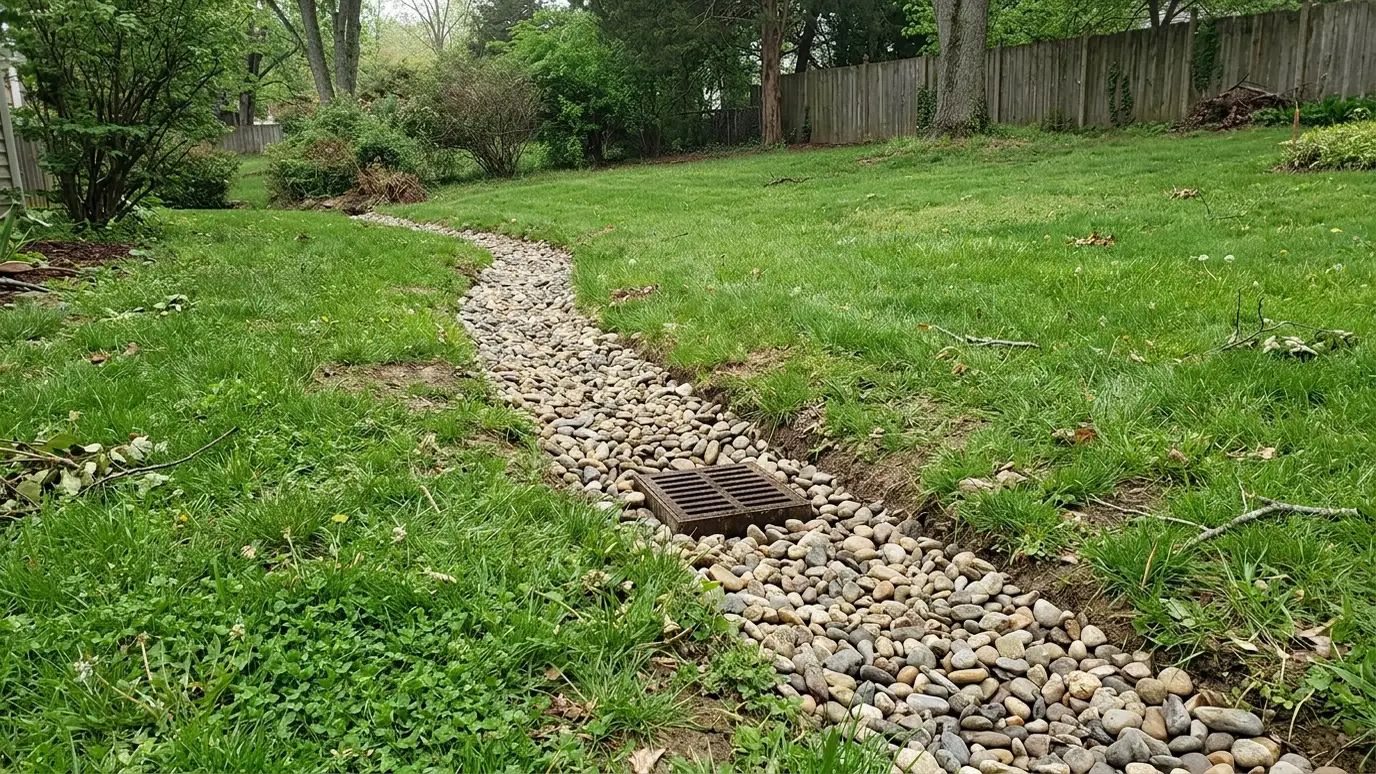
Slope and drainage
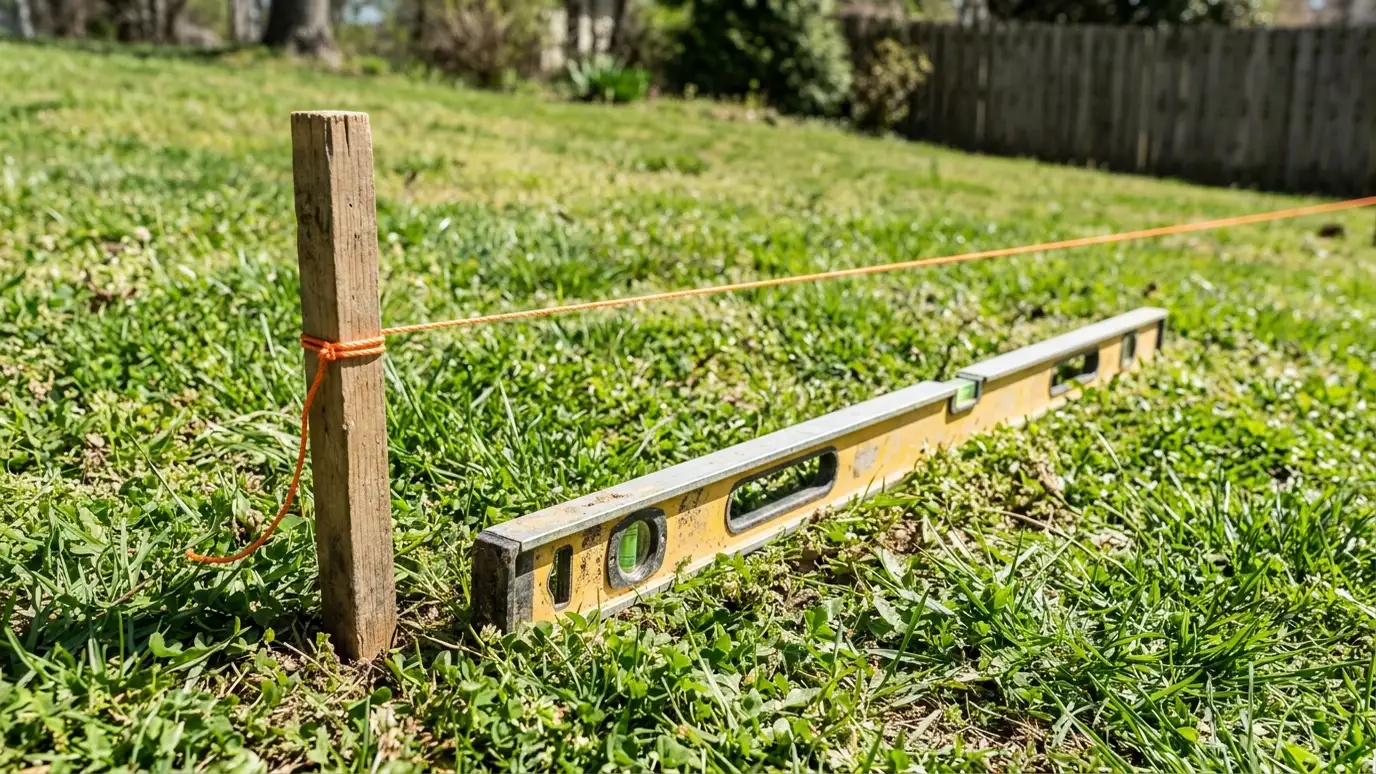
Turf should slope gently, enough to carry water off. Clay soils may need a drain pipe in the base. We look at where the water goes and make a path for it.
Avoid sending water toward the house.
Weed barrier
A barrier between the soil and the stone limits weeds from growing up. Weeds that land on top of the turf can still sprout in the infill and are pulled or sprayed.
Barrier fabric should pass water.
Test before the turf goes on
Walk the base, pour water on it and look for low spots. Fix problems now, because nothing can be fixed once turf is glued down. A good installer welcomes your inspection.
Photos of each step are a good record.
Ask about base depth, stone type, compaction and drainage in writing before you compare any prices.